A heat pump quote tells you the price. A good heat pump proposal should also help you understand how that price was reached and why the system being proposed should work in your home.
That means understanding more than the make and model of the heat pump.
You should be able to see what your home needs, how the heating system has been designed around it, what performance you can reasonably expect, what work is included and what assumptions have been made.
Because two heat pump quotes can contain similar equipment and arrive at very different prices.
The important question isn’t simply:
Which one costs less?
It’s:
What has actually been designed for my home?
You don’t need to understand every engineering calculation. But you should be able to see that the calculations have been done and understand the decisions they led to.
Why can heat pump quotes be so different?
A heat pump isn’t a standalone appliance. It is part of a complete home heating system.
Its performance depends on the home it is heating, the radiators or underfloor heating delivering that heat, the temperature at which the system operates, the pipework and controls, and the household’s hot water requirements.
That means two installers can assess the same home and propose quite different systems.
One may recommend changing several radiators. Another may retain them.
One may propose a larger heat pump. Another may specify a smaller one.
One may predict different energy use from another.
Those differences don’t automatically mean one proposal is right and another is wrong.
But you should be able to understand why those decisions have been made.
That’s why comparing heat pump quotes on price alone can be misleading.
A better comparison starts with the evidence behind the proposal.
Has your home actually been assessed?
A proper heat pump design starts by understanding how much heat your home needs.
That requires a room-by-room heat-loss calculation.
Heat escapes through walls, windows, floors, roofs and ventilation. How much is lost depends on factors including the construction and insulation of the home, the temperature required inside and the conditions outside.
Calculating this room by room matters because different parts of the same home can behave very differently.
A large living room with several external walls and windows may lose heat much faster than an internal hallway, for example.
The whole-home calculation helps establish the overall heating requirement. The room-by-room calculations help determine whether each space can receive enough heat from its radiator or underfloor heating at the proposed operating temperature.
This isn’t simply an Adlår preference. MCS guidance states that heat-loss calculations for heat-pump design need to be applied on a room-by-room basis, taking account of factors such as building fabric, room dimensions, air-change rates and internal and external design temperatures.
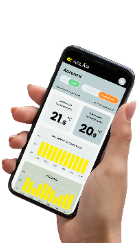
At Adlår, our Home Energy Assessment therefore shows room-by-room heat loss alongside the output available from the home’s proposed or existing emitters.
The individual numbers will be different in every home.
The principle is what matters:
The system should be designed around what your home needs, rather than what a similar home might need.
A useful question to ask: Can you show me the room-by-room heat-loss calculation used to design my system?
How has the proposed system been designed around your home?
Once the heating requirement is understood, the next question is what has been designed to meet it.
A proposal should tell you which heat pump is being recommended.
More importantly, it should explain why.
A bigger heat pump isn’t automatically a better heat pump. And the headline output shown on a manufacturer’s brochure doesn’t, by itself, tell you whether a particular unit is right for your home.
The useful comparison is between:
what your home needs under the design conditions
and
what the proposed heat pump can provide under those conditions.
The proposal should therefore make it possible to understand how the calculated heating requirement has led to the selection of the proposed system.
At Adlår, our detailed assessment brings these pieces together by showing the home’s calculated heating requirement alongside the proposed heat pump, outdoor design temperature, design flow temperature and expected output under those conditions.
Hot water also needs to be considered.
The number of people living in the home, how hot water is used, the proposed cylinder and its location can all influence the final design.
MCS’s heat-pump design standard similarly identifies calculated hot-water demand, emitter information, design flow temperature and hot-water cylinder specification among the information that should be provided to the customer before installation.
You shouldn’t need to become a heating engineer to choose a heating system.
But the engineer should be able to explain why they’ve chosen it.
A useful question to ask: Why have you selected this heat pump for my home, and what calculations led to that decision?
What flow temperature is proposed and can your radiators deliver enough heat?
This is one of the most important parts of a heat-pump proposal.
It’s also one homeowners may never think to ask about.
Flow temperature is the temperature of the water leaving the heat pump and circulating through the heating system.
Heat pumps generally operate more efficiently when they can keep a home comfortable using lower water temperatures.
But lowering the flow temperature isn’t an objective in isolation.
Your radiators or underfloor heating still need to transfer enough heat into each room.
This creates an important relationship between flow temperature, emitter size and efficiency.
Two quotes could potentially propose similar heat pumps but design them to operate at different temperatures.
One design might retain more of the home’s existing radiators by operating at a higher temperature.
Another might propose larger radiators so the system can provide the required room heat at a lower temperature.
Neither decision should be judged purely by the number of radiators being changed.
The important question is whether the emitters can provide the heat each room requires at the proposed operating conditions — and what that means for system performance.
MCS’s heat-emitter guidance explicitly connects room heat loss, emitter selection and heating flow temperature when designing a system.
Adlår’s Home Energy Assessment makes that relationship visible by comparing calculated room heat loss with emitter output and showing expected system performance at different flow temperatures.
So if one quote includes more radiator changes than another, don’t simply ask:
Why is this quote more expensive?
Ask:
Why are these radiator changes being recommended, and what do they allow the heating system to do?
A useful question to ask: What flow temperature has my system been designed for, and can my radiators provide enough heat at that temperature?
What performance and running costs should you reasonably expect?
A good proposal should help you understand how the system is expected to perform.
You may, for example, be shown a SCOP, or Seasonal Coefficient of Performance.
In simple terms, SCOP is an indication of how much useful heat a heat pump is expected to provide relative to the electricity it consumes over a heating season under defined conditions.
But the number needs context.
Flow temperature affects performance.
System design matters.
The heating demand of the home matters.
And real-world operating conditions matter.
That’s why an efficiency figure should come with enough information to understand the assumptions behind it.
The same applies to running costs.
An annual cost estimate can look reassuringly precise. But without understanding how it was calculated, that precision can be misleading.
A useful estimate should make its assumptions clear.
For example:
- What annual space-heating demand has been assumed?
- What hot-water demand has been allowed for?
- What system efficiency has been used?
- What electricity price has been assumed?
- What information about the home’s existing energy use has been considered?
There is also an important distinction between three sources of information that homeowners may encounter.
EPC estimate
An EPC provides a standardised assessment of a home’s energy performance and can be a useful starting point, but it relies on standardised assumptions.
Historical energy use
Your previous bills tell you something different: how much energy the household has actually purchased while living in the home with its existing heating system and habits.
Heat-loss calculation
A detailed heat-loss calculation is an engineering assessment used to establish how much heat the home and individual rooms require under defined design conditions.
Three useful sources of information. Three different purposes.
Adlår’s initial Energy Consultation deliberately distinguishes between EPC information, MCS modelling and energy use reported by the homeowner rather than presenting them as interchangeable. The later Home Energy Assessment then uses detailed survey and design information to develop the proposed system further.
That distinction matters when somebody tells you what a heat pump will cost to run.
What about guaranteed savings?
Future energy bills can’t be predicted perfectly.
Weather changes.
Energy prices change.
People use their homes differently.
Hot-water demand changes.
Control settings change.
And actual performance depends on how the system has been designed, installed, commissioned and operated.
A well-explained estimate is still extremely useful.
But confidence should come from understanding how the estimate was produced and what could cause the real result to differ from it not from pretending those uncertainties don’t exist.
Adlår’s own energy-performance information explicitly identifies these variables and distinguishes calculated estimates from guaranteed outcomes.
A useful question to ask: Can you show me how the expected performance and running costs were calculated, including the assumptions behind them?
What exactly are you paying for?
Once you understand the design, the price becomes much easier to evaluate.
A heat pump quote should make clear what work is actually included.
Depending on the home, that could include:
- the heat pump;
- hot-water equipment;
- installation labour and materials;
- radiator or other emitter changes;
- pipework alterations;
- electrical work;
- controls;
- external pipework;
- drainage;
- equipment mounting or bases;
- removal of existing equipment;
- commissioning;
- other site-specific work.
Not every home will need all of those things.
That’s precisely why comparing the headline price can be misleading.
A £12,000 proposal and a £15,000 proposal aren’t necessarily £3,000 apart if they aren’t proposing the same scope of work.
Adlår’s detailed proposal separates the heating system, standard installation, site-specific requirements, hot-water system, upgrades, maintenance and applicable grant before arriving at the customer’s total.
The exclusions matter too.
No installer can see every concealed detail of a home before work begins. Existing pipework may be inaccessible or construction details may differ from what was expected.
But foreseeable exclusions and assumptions should be clear.
Before accepting a proposal, you should understand:
What is included?
What isn’t included?
What assumptions have been made?
What circumstances could change the price?
How would any additional work be explained and agreed?
Price certainty is valuable.
Understanding what that price is based on is just as important.
What happens after installation?
The performance of a heat pump isn’t determined simply by installing the equipment.
The completed heating system also needs to be commissioned and set up correctly.
So when comparing heat pump proposals, look beyond installation day.
You should understand what happens next.
Commissioning: How will the installer check that the completed system is operating as designed?
Handover: Will somebody explain how the heating system and controls work?
Monitoring and optimisation: Is there any review of how the system behaves once it is operating in the real home?
Servicing: What ongoing maintenance is recommended or required?
Warranty: Which parts of the system are protected, for how long and by whom?
Support: Who do you contact if something doesn’t seem right?
And then there is a question that doesn’t always become obvious until something goes wrong.
What happens if all the equipment works, but the heating system doesn’t perform as expected?
A manufacturer’s warranty can protect against certain equipment faults.
That isn’t necessarily the same thing as someone taking responsibility for the performance of the complete heating system.
That’s a question of system accountability, rather than simply equipment warranty and one we’ll explore separately.
How should you compare two heat pump quotes?
Once you can see the information behind the price, comparison becomes much more meaningful.
Don’t compare only… | Compare… |
Total price | Complete scope, exclusions and assumptions |
Heat pump model | Why it suits the home’s calculated requirement |
Headline kW | Required heat against available output at design conditions |
Number of radiator changes | Emitter output at the proposed flow temperature |
Estimated annual cost | Calculation and assumptions behind it |
Warranty length | What is protected, by whom, and who remains responsible |
The cheapest quote may still be the right one.
The most expensive proposal isn’t automatically better.
The point is that you now have something more meaningful than price to compare.
You can compare the thinking behind the proposals.
Five questions to answer before accepting a heat pump quote
You don’t need to audit the engineering yourself.
But before making a decision, you should be able to answer five questions.
What does my home need?
Has its heat loss been calculated room by room, and have its hot-water requirements and existing heating system been considered?
What has been designed?
Which heat pump, operating temperature, emitters, hot-water system and controls are proposed and why?
What should I reasonably expect?
What efficiency, energy consumption or running costs have been estimated, and what assumptions sit behind those figures?
What am I paying for?
What work is included, what is excluded, which costs are site-specific and what could cause the price to change?
What happens afterwards?
How will the system be commissioned, handed over and supported and who will take responsibility if something doesn’t perform as expected?
If a proposal answers those questions clearly, you have something much more useful than a price.
You have information you can make a decision with.
Frequently asked questions
Can you get a heat pump quote without a home survey?
You may be able to receive an initial heat pump cost estimate without a detailed survey.
But an initial estimate and a properly designed system proposal aren’t the same thing.
Information from your EPC, existing energy use and basic details about the home can provide a useful starting point. Final system design should follow a more detailed assessment of the home and its heating requirements.
MCS itself recommends a property survey before finalising heat-pump system design or entering into contractual arrangements.
At Adlår, our initial Energy Consultation is therefore presented as indicative, with the detailed design developed following the Home Energy Assessment.
Should a heat pump quote include a heat-loss calculation?
A detailed heat-pump proposal should be supported by a room-by-room heat-loss assessment because the amount of heat the home and individual rooms require is fundamental to system design.
MCS guidance specifically identifies room-by-room heat loss as necessary for correctly sizing heat-pump systems and emitters.
Why are my heat pump quotes so different?
Different installers may have made different decisions about heat loss, heat-pump sizing, flow temperature, radiator requirements, hot-water provision and installation scope.
Those differences can affect both the proposed price and expected performance.
Rather than comparing total price alone, ask each installer to explain the design decisions and assumptions behind their proposal.
How do I know if a heat pump quote is good?
A good heat pump proposal should allow you to understand what your home needs, why the proposed system has been selected, what performance you can reasonably expect, what work you’re paying for and what support you’ll receive afterwards.
It doesn’t need to overwhelm you with engineering language.
But the important decisions should be visible and explainable.
Don’t just compare heat pump prices. Compare what’s behind them.
At Adlår, we don’t believe the first question should be which heat pump you want.
We start by understanding the home.
That means looking at how much heat it needs, what individual rooms require, the heating system already in place, the temperatures it can operate at, hot-water requirements and the practical details of installation.
Only then can the proposed equipment, expected performance and price be put into context.
Because a heat pump quote should tell you more than what your heating system will cost.
It should help you understand why it should work in your home.