Many homeowners ask how heat pumps provide hot water, especially when replacing a traditional gas boiler. It’s a key concern, because hot water is not just about comfort—it’s about reliability, performance, and how efficiently your entire heating system operates.
Most guides explain the basics. They describe how an air source heat pump heats water, but they miss a critical issue. In many systems, heating and hot water are handled by the same unit, which creates compromises in performance.
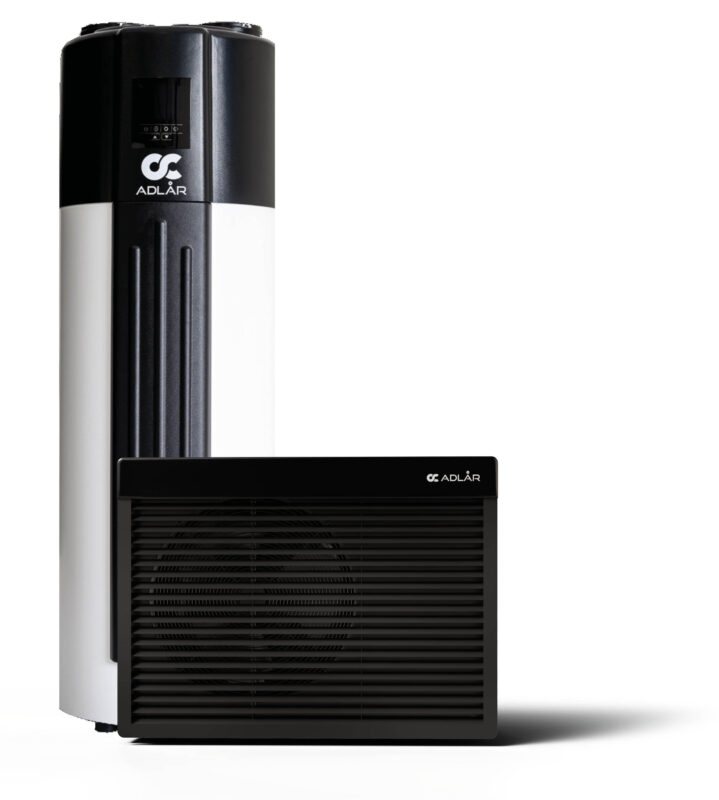
At Adlår Castra, the approach is different. By using a dual heat pump system with a dedicated hot water solution, these compromises are removed.
This guide explains how heat pumps work to provide hot water—and why separating heating and hot water is one of the most important design decisions in modern heating solutions.
How Do Standard Heat Pumps Provide Hot Water?
To understand why system design matters, it helps to start with how most systems operate.
How an Air Source Heat Pump Produces Hot Water
A standard air source heat pump uses air source heat from outside to heat water through a refrigeration cycle.
This process:
- Extracts energy from the outside air
- Compresses it to increase temperature
- Transfers that heat into a hot water cylinder
The same heat pump system is typically responsible for:
- Space heating
- Domestic hot water
This means one unit must meet all heating demands in the home.
Because heat pumps move heat rather than burn fossil fuels, they are highly energy efficient. However, the way they operate creates challenges when trying to meet both heating and hot water needs at the same time.
Why Hot Water Is a Challenge for Most Heat Pump Systems
The challenge is not how heat pumps produce hot water, it’s how they manage it alongside heating.
The Problem with Shared Heating and Hot Water
In most systems, one heat pump must perform two roles:
- Heating your home
- Producing hot water
This creates a conflict in operation.
When hot water is required:
- The system switches modes
- Heating output may pause
- The system increases flow temperature
This increase in temperature reduces efficiency. Heat pumps operate best at lower temperatures, so producing hot water forces the system away from its optimal operating range.
Over time, this can lead to:
- Higher energy use
- Slower recovery times
- Reduced comfort in the home
This limitation is common across many standard source heat pumps, but it is rarely explained clearly.
How Adlår’s Dual Heat Pump System Changes Everything
This is where Adlår’s system design fundamentally changes performance.
Separating Heating and Hot Water
A dual heat pump system separates the two functions entirely:
- One system is dedicated to space heating
- A second system is dedicated to hot water
This removes the need for compromise.
The heating system can operate continuously at efficient temperatures, while hot water is produced independently.
Why This Matters in Real Homes
In practice, this means:
- Heating is never interrupted
- Hot water is always available when needed
- The system operates more efficiently overall
Unlike a hybrid heating system, this is not about switching between different energy sources or using a backup fuel system. Instead, it is a fully electric solution designed for consistent performance.
This separation is the foundation of why the system works more effectively.
What Is the FJORD Cylinder and Why Does It Matter?
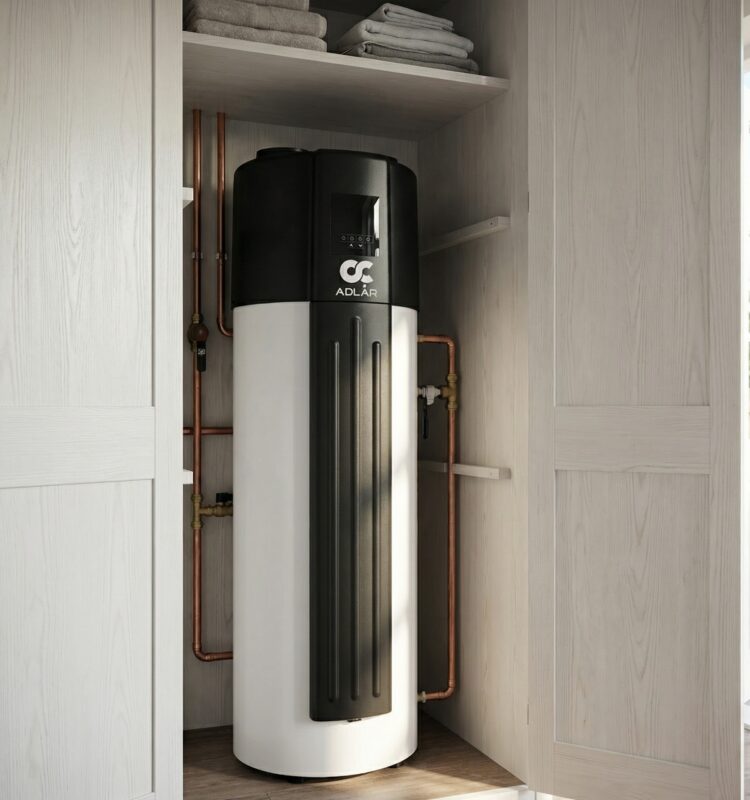
The key component that enables this approach is the FJORD water cylinder.
A Cylinder with Its Own Integrated Heat Pump
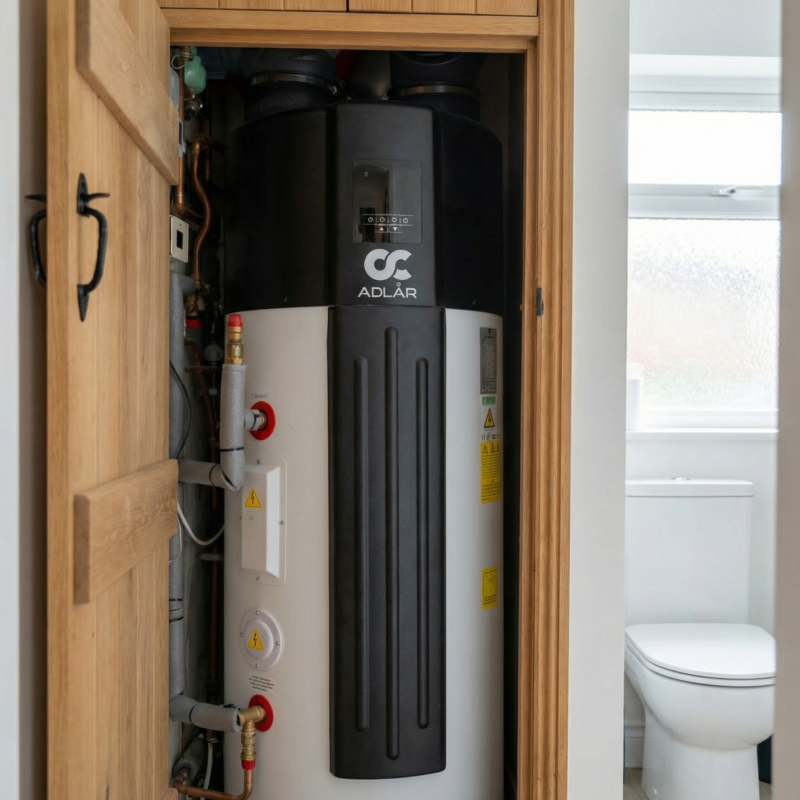
The FJORD cylinder is not a standard hot water tank. It includes a self-contained heat pump built into the unit.
This means:
- Hot water is produced independently
- It does not rely on the main air source heat pump
- It operates as its own dedicated system
In effect, the home has two heat pumps installed—one for heating and one specifically for hot water.
Why This Improves Efficiency and Performance
Because the FJORD cylinder handles hot water separately:
- The main system remains in its most efficient operating range
- There is no need for high-temperature spikes
- Hot water recovery is faster and more consistent
This design also reduces system strain. Instead of one unit doing everything, the workload is shared across two systems, each optimised for its role.
This is the key reason why a dual heat pump system delivers better real-world performance than standard systems.
Why Separating Heating and Hot Water Improves Energy Efficiency
Separating these functions allows each system to operate under ideal conditions.
No Compromise in Operating Temperatures
Heat pumps are most efficient at lower temperatures.
In a shared system:
- Hot water requires higher temperatures
- Efficiency drops
In a dual system:
- Heating remains low temperature and efficient
- Hot water is handled independently
This avoids the efficiency losses seen in standard systems.
Better Energy Use Across the Whole System
By removing the need to switch between functions:
- Energy is used more effectively
- Performance remains stable
- System cycling is reduced
Advice from Money Saving Expert highlights that improving system efficiency is one of the most effective ways to reduce energy costs.
This is where system design has a direct impact on running costs.
Real-World Benefits for Homeowners
This design leads to clear, practical advantages.
Faster and More Reliable Hot Water
With a dedicated system:
- Hot water recovery is faster
- Supply is consistent
- Performance is not affected by heating demand
This is especially important in homes with higher usage.
Improved Heating Performance
Because heating and hot water are separate:
- The home heats more consistently
- There are no interruptions
- Comfort levels improve
Lower Energy Bills Over Time
Improved energy efficiency means:
- Less wasted energy
- Lower running costs
- Better long-term value
Why System Design Matters More Than the Heat Pump
The key takeaway is simple.
The performance of a system is not defined by the unit, it is defined by the design.
A well-designed system:
- Matches the home’s heating demands
- Uses the right combination of technologies
- Delivers consistent performance
Focusing only on the air source heat pump itself misses the bigger picture.
Get Reliable Hot Water with Adlår’s Dual Heat Pump System
If you are considering heat pumps, it is important to understand how hot water is delivered.
A dual heat pump system offers a more advanced approach—one that removes compromise and improves performance.
By using a dedicated hot water system through the FJORD cylinder, Adlår provides:
- Reliable hot water
- Efficient heating
- Long-term system performance
When properly designed, a heat pump system can deliver both heating and hot water without compromise.