Most homeowners assume that once a heat pump is installed, its performance is fixed. In reality, that’s rarely the case. The biggest improvements in energy efficiency, comfort, and running costs often come after installation — through correct optimisation and the right upgrades.
A properly engineered heating system should deliver stable comfort, predictable costs, and long-term reliability. But to achieve that, it needs to be set up, controlled, and protected correctly.
This guide explains how to optimise heat pump settings, improve performance, and extend system lifespan using proven engineering principles — not guesswork.
Why Heat Pump Optimisation Matters More Than Most People Think
Many of the problems people associate with heat pumps — rising bills, uneven heating, or poor performance — are not caused by the technology itself. They are usually the result of how the system is configured and controlled.
Heat pumps rely on:
- Stable flow temperature
- Consistent water movement
- Accurate temperature sensors
When these are not managed correctly, efficiency drops.
At Adlår, the focus is on engineering outcomes, not just installation.
When a system is properly optimised:
- The home heats evenly and predictably
- A stable indoor temperature is maintained
- Energy use is reduced without sacrificing comfort
- Long-term energy savings become achievable
Optimisation is not a tweak. It’s what turns a system into something that performs reliably over time.
Optimising Heat Pump Settings for Maximum Efficiency
Understanding “Low and Slow” Heating Behaviour
A heat pump is designed to run continuously, not in short bursts like a boiler. This is known as “low and slow” heating.
Instead of pushing water close to its boiling point, the system maintains a steady, lower flow temperature. This allows the home to warm gradually and consistently.
This approach:
- Improves overall energy efficiency
- Reduces system strain
- Maintains stable comfort
The goal is not a rapid increase in temperature, but a controlled and consistent environment.
What Is a Heat Pump Setback — and Why It Works
Turning a heat pump off completely often reduces efficiency. When restarted, the system must work harder to recover, increasing energy use.
A setback avoids this.
It is a small reduction in indoor temperature, typically overnight or when the property is empty. The system continues running but at a lower level.
This means:
- The system continues to measure the temperature
- Energy use drops during low-demand periods
- The home remains comfortable
Because the system avoids reheating from cold, it maintains efficiency while still reducing usage.
Weather Compensation and Heat Curves Explained Simply
Weather compensation is one of the most effective ways to improve performance.
An outdoor sensor measures the outdoor temperature and adjusts the flow temperature automatically. This relationship is controlled by the heat curve.
The benefits of weather compensation include:
- Lower energy use across the heating season
- Improved comfort without manual adjustment
- Better overall energy efficiency
Rather than reacting to cold rooms, the system anticipates demand — keeping the home comfortable with minimal waste.
Smart Controls and Ambient Temperature Monitoring
A smart control system can improve how a heat pump responds to changing conditions inside the home — without compromising the efficiency benefits of weather compensation.
It is important to understand that Adlår’s wireless thermostat is not designed to behave like a traditional on/off boiler thermostat.
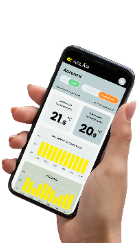
Instead, it acts as an ambient room temperature sensor within the Smart Life ecosystem. This allows the system to monitor real indoor conditions and trigger smart automations that adjust the heating curve dynamically.
For example:
- If room temperature drops below 20°C → the system can increase the heat curve
- If room temperature rises above 21°C → the system can reduce the heat curve
This approach helps reduce the need for manual adjustments as outdoor temperatures change throughout the day or across the seasons.
Rather than switching the heat pump on and off, the system continues operating using low-temperature, “low and slow” heating principles while adding a layer of indoor temperature feedback.
This creates a more stable and comfortable indoor environment while still protecting seasonal efficiency.
Many homeowners already use Smart Life and Home Assistant successfully for this type of control strategy, particularly during spring and autumn when weather compensation alone can sometimes feel slightly too reactive — or not reactive enough — depending on the property.
For more advanced users, Home Assistant can also integrate:
- Additional temperature sensors
- Humidity monitoring
- Occupancy detection
- Predictive automations
However, Smart Life provides a much simpler off-the-shelf route for homeowners who want smarter control without needing to build a fully customised system.
Radiator valves can then be used to help balance heat distribution across different rooms, supporting consistent comfort throughout the property.
The result is:
- More stable indoor comfort
- Better day-to-day control
- Reduced overheating and underheating
- Improved responsiveness without sacrificing efficiency
Optimising the heating curve is still an important part of system tuning, and many homeowners find that small adjustments can significantly improve comfort once the system is matched correctly to the property’s thermal characteristics.
Heat Pump Upgrades That Improve Performance and Longevity
Electric Anode: Protecting Your Hot Water Cylinder for Life
Inside a hot water cylinder, corrosion is a common long-term issue. Water reacting with metal causes gradual wear, which can eventually lead to failure.
Traditional systems use sacrificial anodes that degrade over time and require replacement.
An electrical anode works differently.
It uses a very low electrical current to create a protective field inside the tank, preventing corrosion from forming at all.
This provides:
- Continuous protection
- No maintenance requirements
- Reliable performance regardless of water quality
In the Adlår system, this supports consistent hot water control and ensures the cylinder remains protected for its full lifespan.
Magnetic Filter: Keeping Your System Clean and Efficient
As water circulates through a heating system, small particles of metal can break away and form sludge.
This buildup can:
- Restrict flow
- Reduce heat transfer
- Impact system performance
A magnetic filter captures this debris before it reaches the heat pump.
Installed on the return pipe, it:
- Protects key components
- Maintains stable flow temperature
- Supports long-term energy efficiency
During servicing, the filter is cleaned, ensuring the system continues to operate effectively.
Wireless Thermostat: Adding Ambient Feedback to Weather Compensation
A wireless smart thermostat can improve how a heat pump responds to real indoor temperatures while still maintaining the efficiency benefits of weather compensation.
Unlike a traditional thermostat, it is not intended to switch the heat pump fully on and off.
Instead, the thermostat works as an ambient temperature monitor within the Smart Life ecosystem, allowing smart automations to adjust the heating curve dynamically based on indoor conditions.
For example:
- If the room temperature falls below a chosen comfort level, the system can increase the heating curve slightly
- If the room temperature rises above the target range, the system can reduce output gradually
This creates a more responsive heating experience without disrupting the steady, low-temperature operation that heat pumps are designed for.
The benefit is that homeowners retain the efficiency advantages of weather compensation while adding an additional layer of room-temperature feedback.
This can be especially useful during milder spring and autumn weather, where outdoor temperatures can fluctuate quickly and some properties may benefit from finer indoor control.
For homeowners who want more advanced functionality, Home Assistant integrations can support:
- Multiple indoor sensors
- Humidity monitoring
- Occupancy-based control
- Predictive heating automations
For most households, however, Smart Life provides a simpler and more accessible route to smarter heating control.
Because the system continues operating continuously rather than cycling aggressively on and off, it supports:
- Stable comfort
- Better control
- Improved seasonal efficiency
- Reduced manual intervention
When combined with correct commissioning and properly tuned heat curves, this approach helps the system maintain predictable comfort and long-term performance.
Why System Protection Is Just as Important as Optimisation
Optimisation improves performance. Protection ensures that performance lasts.
A heat pump depends on:
- Clean system water
- Stable flow
- Accurate control
Without this, efficiency can decline over time.
For example:
- Sludge can restrict flow and reduce output
- Corrosion can damage internal components
- Poor control can increase energy use
Upgrades such as magnetic filters and electrical anodes protect the system from these issues.
They ensure the system continues to deliver energy savings, consistent comfort, and reliable performance over the long term.

The Adlår Approach: Designed, Not Just Installed
Most systems are installed to function.
Adlår systems are engineered to perform long-term.
This includes:
- Designing around real heat loss and flow requirements
- Using controls that support efficiency
- Protecting the system from internal wear
- Commissioning for real-world performance
The result is a system that:
- Maintains stable comfort
- Delivers predictable running costs
- Operates efficiently year after year
Because when a system is designed properly, it works — and keeps working.
Upgrade Your Heat Pump System with Adlår Castra
If you want to improve how your system performs, the focus should be on three things:
Protection. Performance. Control.
Adlår’s upgrade approach includes:
- Electrical anode for long-term cylinder protection
- Magnetic filter for system cleanliness and efficiency
- Smart wireless thermostat for improved control
These are not extras. They are part of ensuring your system continues to operate as designed — delivering comfort, efficiency, and reliability over time.